




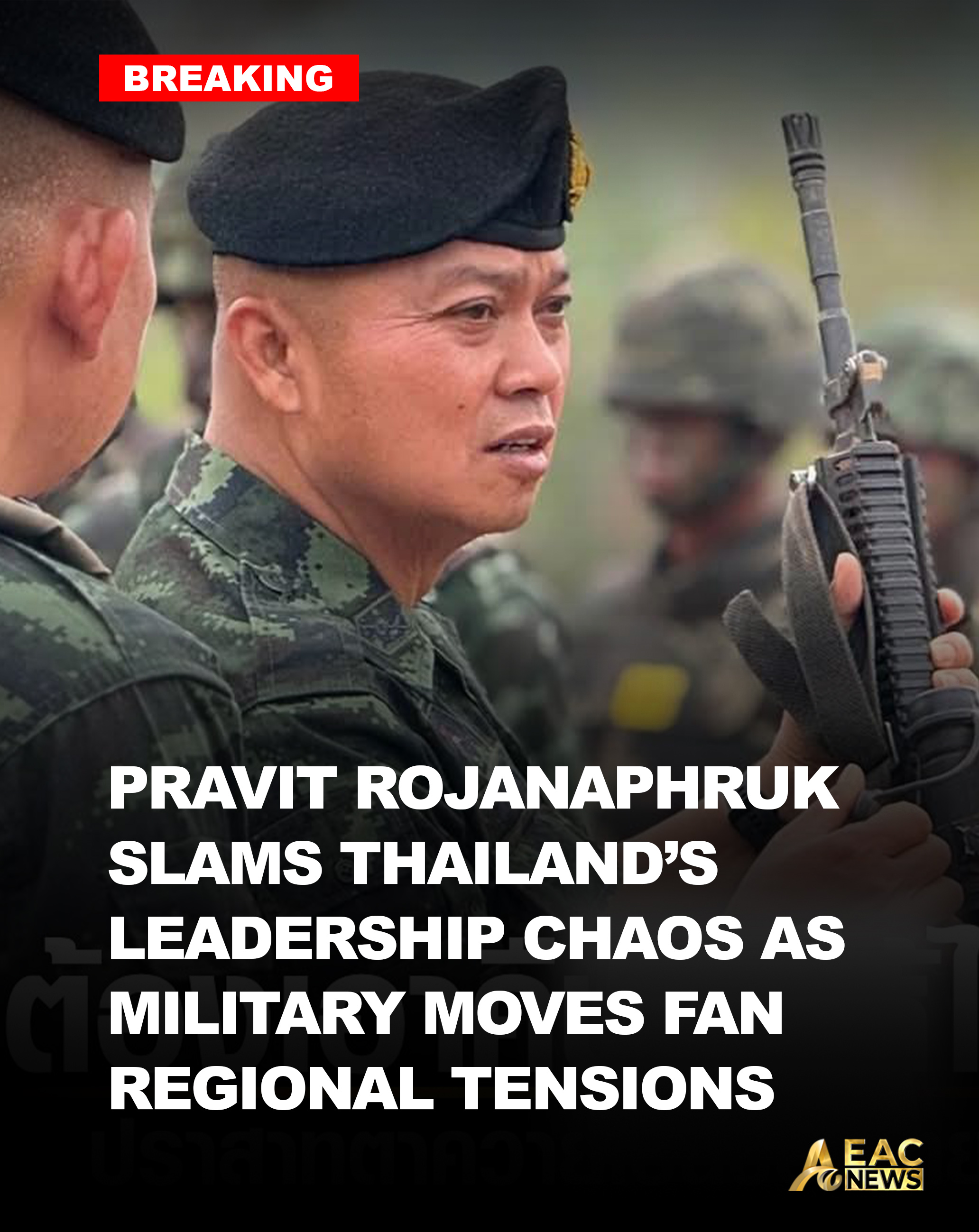
BREAKING: Pravit Rojanaphruk Slams Thailand’s Leadership Chaos as Military Moves Fan Regional Tensions








Thailand, August 11, 2025 — A recent social media post by renowned Thai journalist and former columnist Pravit Rojanaphruk has sparked widespread debate about Thailand’s leadership and the influence of the military amid rising regional tensions. Rojanaphruk’s sharp commentary highlights concerns over the apparent dominance of military figures in defining Thailand’s foreign policy and national stability.
In his post, Rojanaphruk criticized Lt. Gen. Boonsin Padklang, Commander of the Second Army Region, for declaring that the disputed Ta Kwai Temple “belongs to Thailand,” despite ongoing diplomatic efforts to de-escalate tensions with Cambodia. This provocative statement came just days after Thailand and Cambodia signed a ceasefire agreement on August 7, 2025, which explicitly called for both sides to refrain from provocative actions and maintain current troop deployments.
The ceasefire’s key points included commitments to avoid escalations and provocative acts that could risk renewed conflict. However, Lt. Gen. Boonsin’s unilateral declaration appeared to undermine these efforts, prompting swift condemnation from the Cambodian Ministry of Defence, which accused Thailand of “provocation” and “deliberate aggression” towards Cambodia.
Adding to the concern was the lack of response from Thailand’s government officials—including the acting Prime Minister, the government spokesperson, the Foreign Minister, and the Foreign Ministry spokesperson—all of whom remained silent for over 12 hours following the incident. Meanwhile, Cambodia’s government doubled down on its condemnation, raising serious questions about Thailand’s true intentions and diplomatic stance.
Rojanaphruk’s social media post humorously suggested that if Lt. Gen. Boonsin were to take on multiple key government roles—Acting Prime Minister, Foreign Minister, and Government Spokesperson—it would clear up confusion about who actually leads Thailand and what its foreign policy objectives are. This pointed critique underscores how military figures appear to be shaping, or perhaps even overshadowing, the civilian government during critical moments.
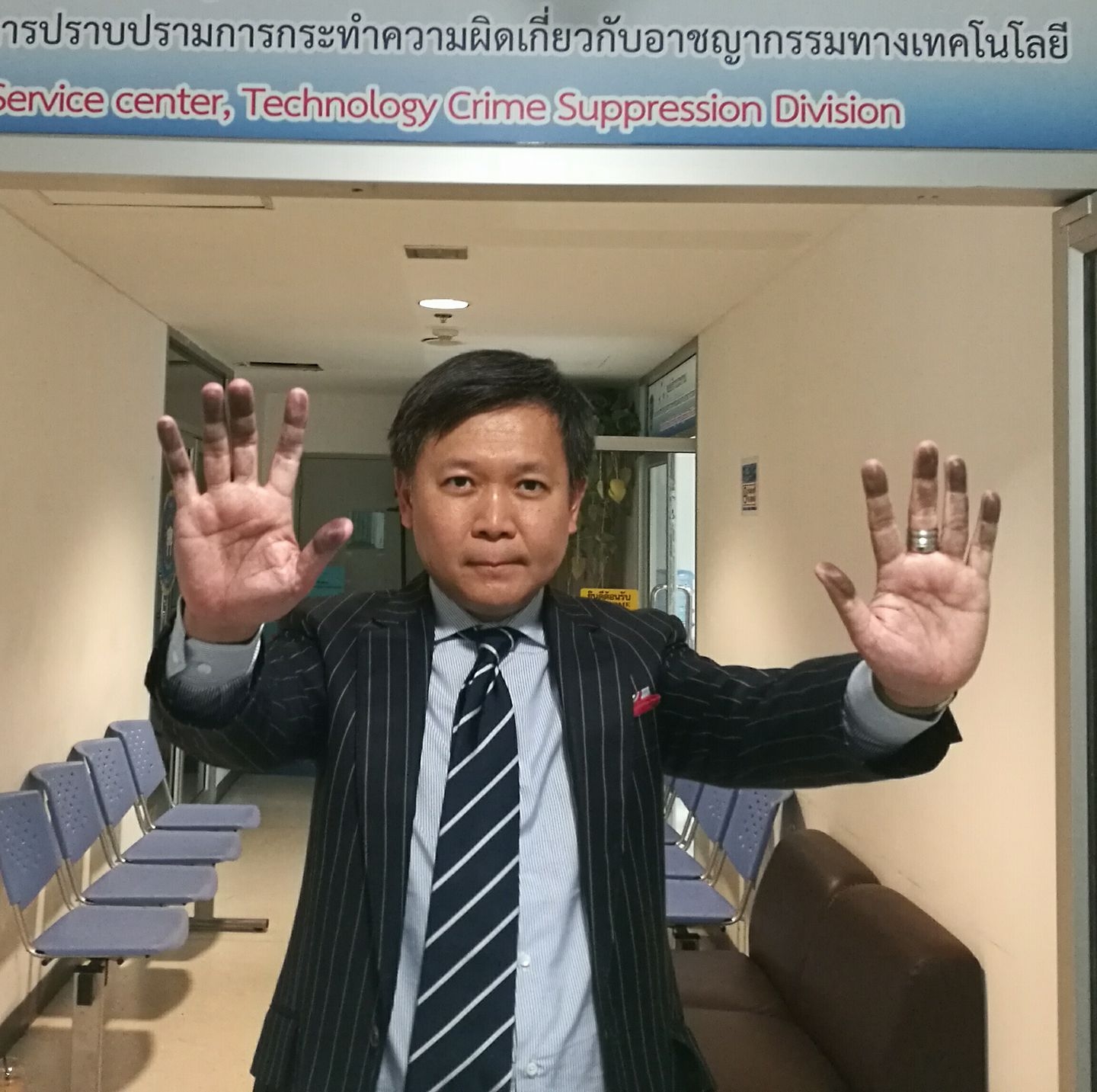 Pravit Rojanaphruk is a respected Thai journalist, author, and former columnist known for his outspoken advocacy of press freedom, democracy, and transparency. With decades of experience covering Thai politics and regional issues, Rojanaphruk has built a reputation for challenging government narratives and promoting open dialogue. His social commentary often reflects a concern for Thailand’s democratic integrity and the influence of military power in the country’s politics.
As tensions rise between Thailand and Cambodia, voices like Rojanaphruk’s serve as vital watchdogs—drawing attention to the need for responsible leadership and clear diplomatic strategy, especially in a region fraught with conflict.
Related News